
This story was originally posted on the McGill Human Rights Internship Program Blog, July 10, 2026. By Sahib Kaur Dhaliwal.
The 21st Annual General Meeting of Citizens With Disabilities Ontario (CWDO) marked the launch of CWDO’s Legacy Project by honouring Tracy Odell, a disability and human rights advocate, as the first past member to be recognized. The session celebrated Tracy’s legacy, highlighting her lifelong commitment to accessibility, her contributions to systemic change, and her enduring impact on disability advocacy and the CWDO community.
Tracy’s journey in accessibility and disability advocacy is inspiring. Her experiences and perspectives offer key lessons on how we can deepen our understanding of societal and systemic barriers, take action, and work toward a more accessible and equal society. These lessons not only prompted deeper reflection on my own learning, but also provided a framework for understanding my work during my internship with CWDO, where my research focuses on the experiences of persons with disabilities navigating the Canadian insolvency framework. I hope to carry these guiding principles beyond this internship and apply them to making meaningful personal and professional contributions to social change.
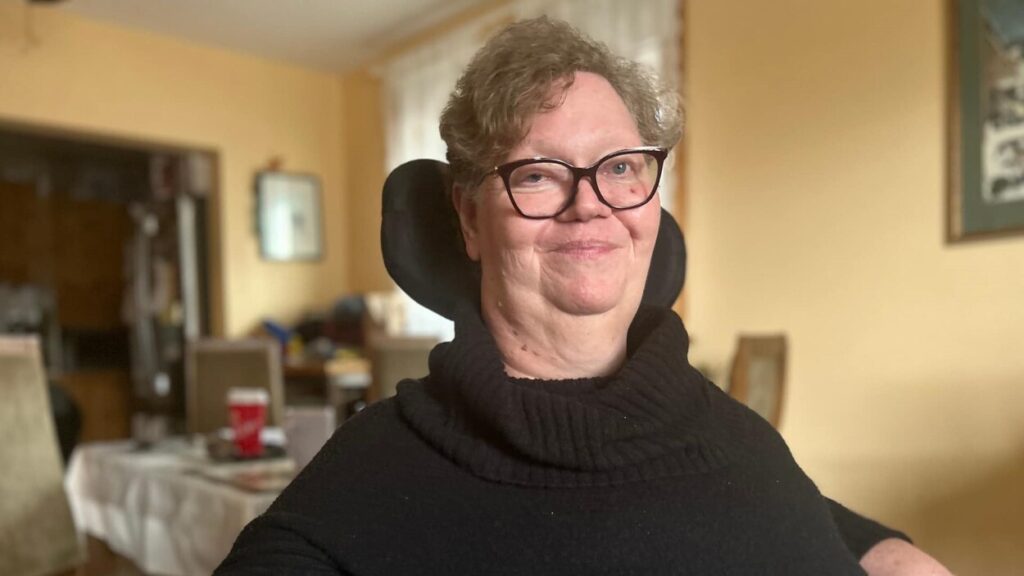
In a moderated session, Tracy was asked how someone can become a strong advocate. Her response was powerful: “Get Involved, Speak Up, and Show Up.” These three pillars of disability advocacy challenged my initial assumptions about the internship and reshaped how I understood the purpose of my final project. Tracy’s framework was pivotal in helping me recognize that my internship was far more than an academic research project; it was an opportunity to contribute to broader conversations about accessibility, dignity, and change. Ultimately, Tracy’s living experiences embodied these pillars of disability advocacy, and her story strengthened my commitment to learning with humility, listening to the experiences of others, and approaching advocacy with purpose.
Reflecting on these pillars of disability advocacy, I came to appreciate the depth and clarity that make them so powerful. By centring the individual and remaining rooted in accessibility, they offer a broad, flexible, and self-initiated approach to advocacy. This framework recognizes each person’s abilities, the barriers they face, and the living experiences they bring. In doing so, it affirms that advocacy can take many forms, each shaped by the individual and grounded in a commitment to advancing change.
These pillars break advocacy down to its rawest form, illustrating that making a difference requires just that: getting involved, speaking up, and showing up. They strip away the pressure of achieving radical policy transformation and immediate results, and instead centre advocacy on the person and the process. To me, these broader principles serve as a guiding lesson, equally powerful in all forms of advocacy and in life more generally.
Getting Involved in What Is Important to You
At the beginning of my remote human rights internship, I imagined the work would be similar to a virtual class. I expected to conduct research from home, work independently, read cases and legislation, and eventually produce a final research paper. Very early on, I realized that this understanding was incomplete.
My initial assumptions overlooked the gaps that exist in legislation, the inherent tensions involved in balancing policy objectives, and the challenges of accessing the insolvency framework and related information more generally. Through this research, I have come to understand that my involvement offers only a glimpse into the realities of persons with disabilities who turn to the insolvency system, including both legislative and non-legislative forms of relief, in moments of financial distress.
Tracy’s perspective provided a conceptual framework that not only helped me situate my work, but also helped me appreciate the process of learning and the efforts that lead to progress. Grounded in my interest in improving financial literacy and access to information, this research became my own form of involvement.
Raised in a household of entrepreneurs, financial literacy has always held immense importance in my life. This research has deepened my understanding of how early access to financial resources and information can serve as an essential non-legislative response to financial distress and as a cornerstone of broader efforts to improve financial literacy. At the same time, gaps in financial literacy do not exist in isolation. For persons with disabilities, these gaps are often compounded by systemic barriers related to employment, income security, and access to public services, making financial distress and insolvency more likely. When persons with disabilities become insolvent, the core question becomes whether legal insolvency procedures are truly accessible to them and whether they meaningfully account for systemic barriers. Fundamentally, this leads to the question of whether the insolvency framework can respond to persons with disabilities in a dignified and sustainable way while providing tangible tools for rehabilitation.

Speaking Up When Support Is Not There
Through my own experiences advocating for my community, I have come to understand the heavy responsibility often placed on those most affected by a policy to also work toward changing it. This is a difficult reality: people who face systemic barriers are often the ones leading efforts to raise awareness and create change, because their living experiences reveal barriers that may be invisible to others.
Tracy’s contributions to disability advocacy were rooted in speaking up for services that were unavailable to her. In advocating for supports that would meet her own needs, she also exposed gaps that affected many others. Through these reflections, I came to understand speaking up for oneself as both a fundamental skill and a powerful medium for broader social change.
Tracy’s efforts to speak up for a life with the same services, choices, and opportunities as anyone else fostered systemic change because others shared similar unmet needs. Speaking up for oneself can therefore become a way of speaking up for others facing similar barriers. This act of self-advocacy can inspire others to speak up as well, gradually building into a broader movement.

Showing Up in Any Way You Can
The third pillar, showing up, is a testament to commitment. There is no one-size-fits-all approach; rather, showing up is shaped by each person’s circumstances and capacities, with no form of contribution being more valuable than another. It can range from writing a blog post to giving a keynote address.
Halfway through my internship, showing up has meant continuity, consistency, and the willingness to pivot. Researching areas of law that were new to me has required patience, persistence, and openness to learning from many sources, including academic scholarship, legislation, podcasts, interviews, and the experiences of people behind the law. Through mentorship and collaboration, showing up has become a practice of sustained learning, reflection, and contributing to broader efforts to raise awareness.
These pillars of disability advocacy are strengthened when they are practiced in collaboration. Advocacy becomes more powerful when it is shaped by learning from others, listening to living experiences, and drawing inspiration from those who paved the way. This has been especially true in my research, which continues to pivot, evolve, and deepen through mentorship, academic guidance, living experiences, conversations with professionals in the insolvency field, and the work of disability activists, while remaining anchored in a broader commitment to financial literacy.
Tracy’s living experiences shaped the narrative through which she selflessly advocated for systemic transformation, equal opportunities for persons with disabilities, and a society rooted in accessibility, inclusion, and dignity. I hope to carry these lessons forward as guiding principles for the remainder of my internship, my professional career, and my continued advocacy.
To hear Tracy’s inspiring perspective and learn more about her lifelong contributions to human rights and disability advocacy, please visit: Spotlighting Past Members – Citizens With Disabilities Ontario